It looks like your library, because it is.
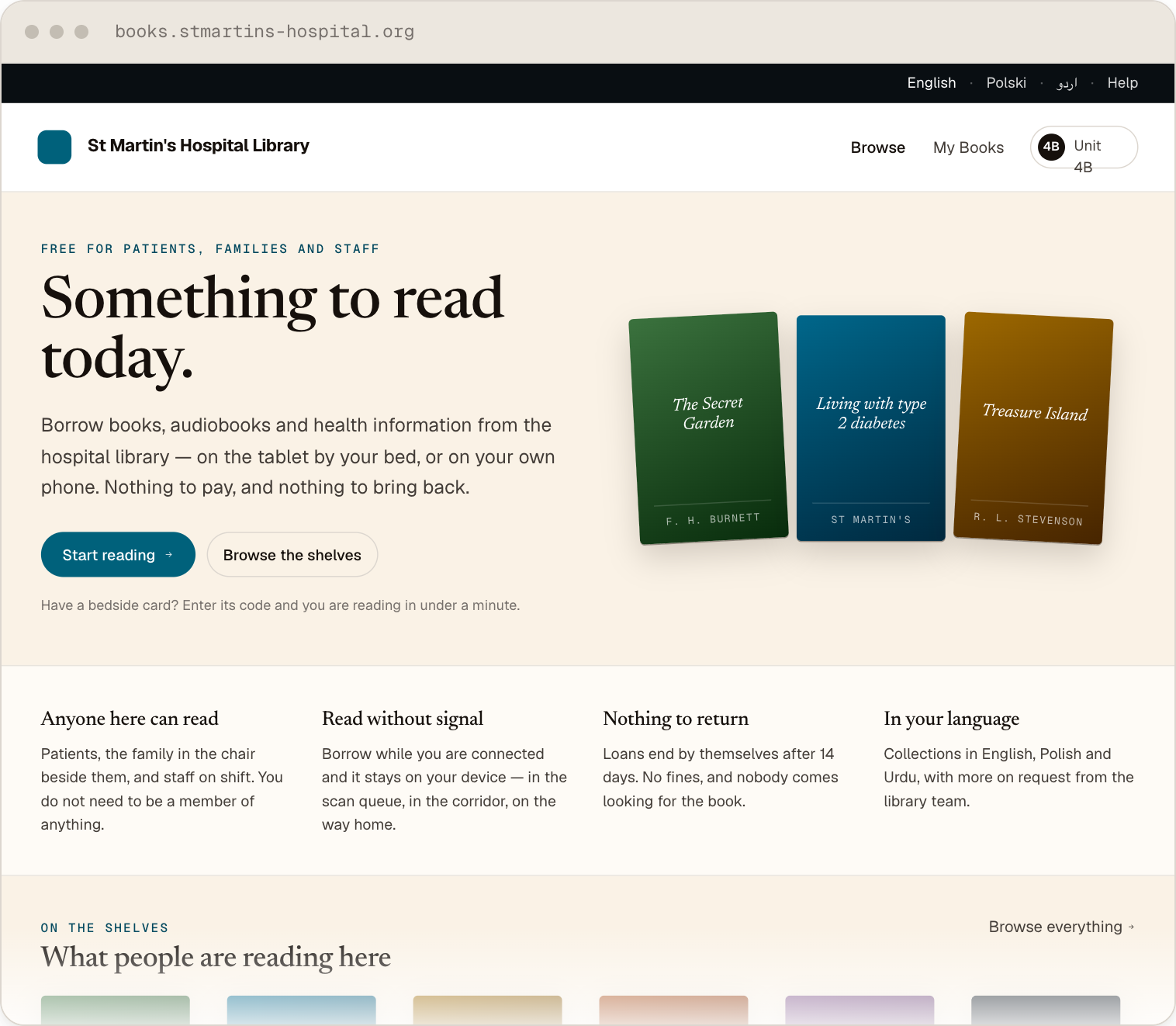
Real screens, running under one customer's branding — a hospital library in Leeds. Every organisation gets these six steps under its own name, colour and domain.
They arrive at an address that is yours.
The address is the library's own. The name, the colour and the languages are theirs. Nothing here says DITA — a reader has no reason to know the platform exists.
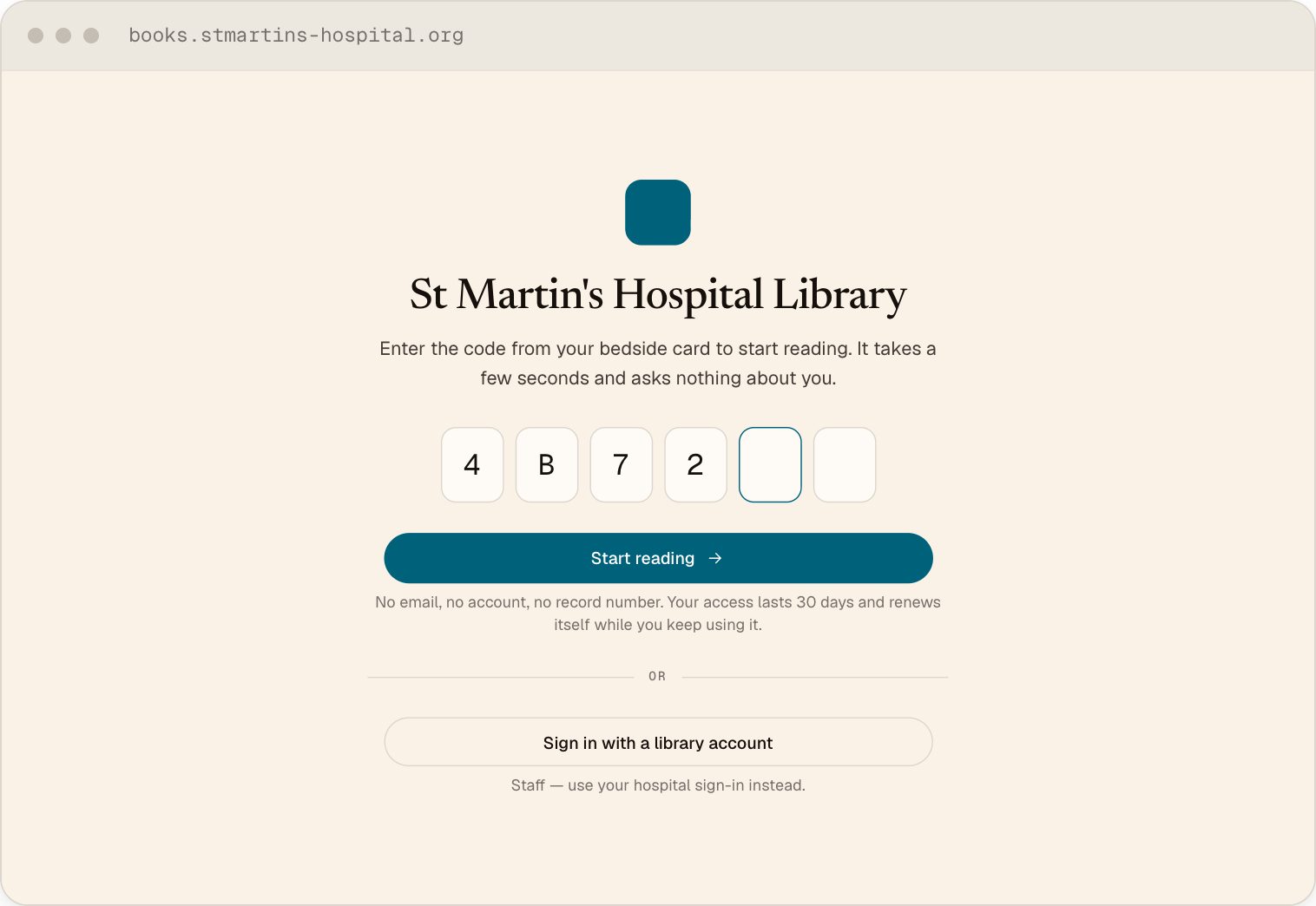
A code on a card, or an email invitation.
No account to create before they can look. Some members are handed a printed code; others arrive already signed in through their organisation. Either way it is one screen.
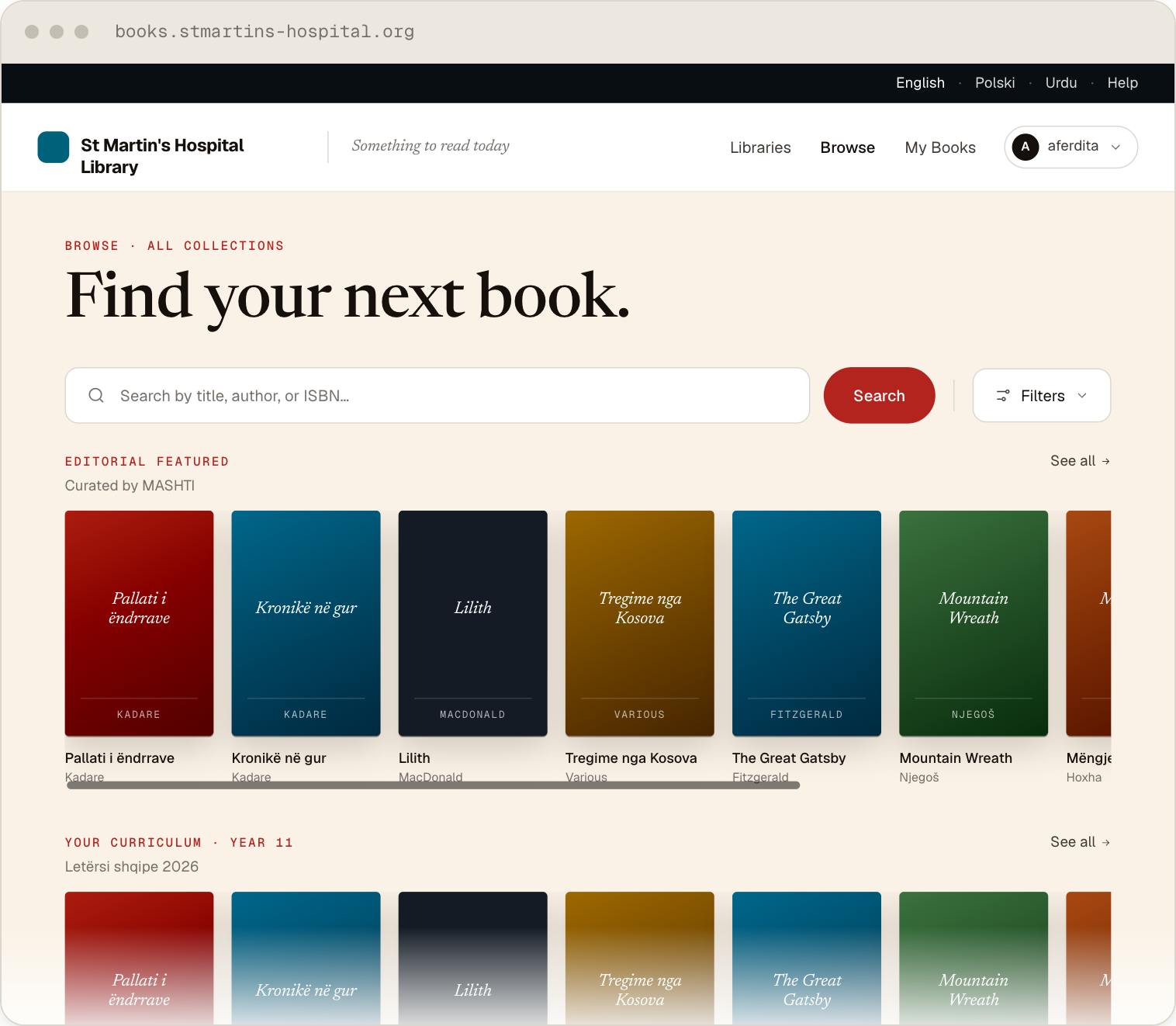
Shelves, not a search box.
Books are grouped the way a librarian would group them — by subject, by collection, by what has just arrived. Search is there for people who know what they want.
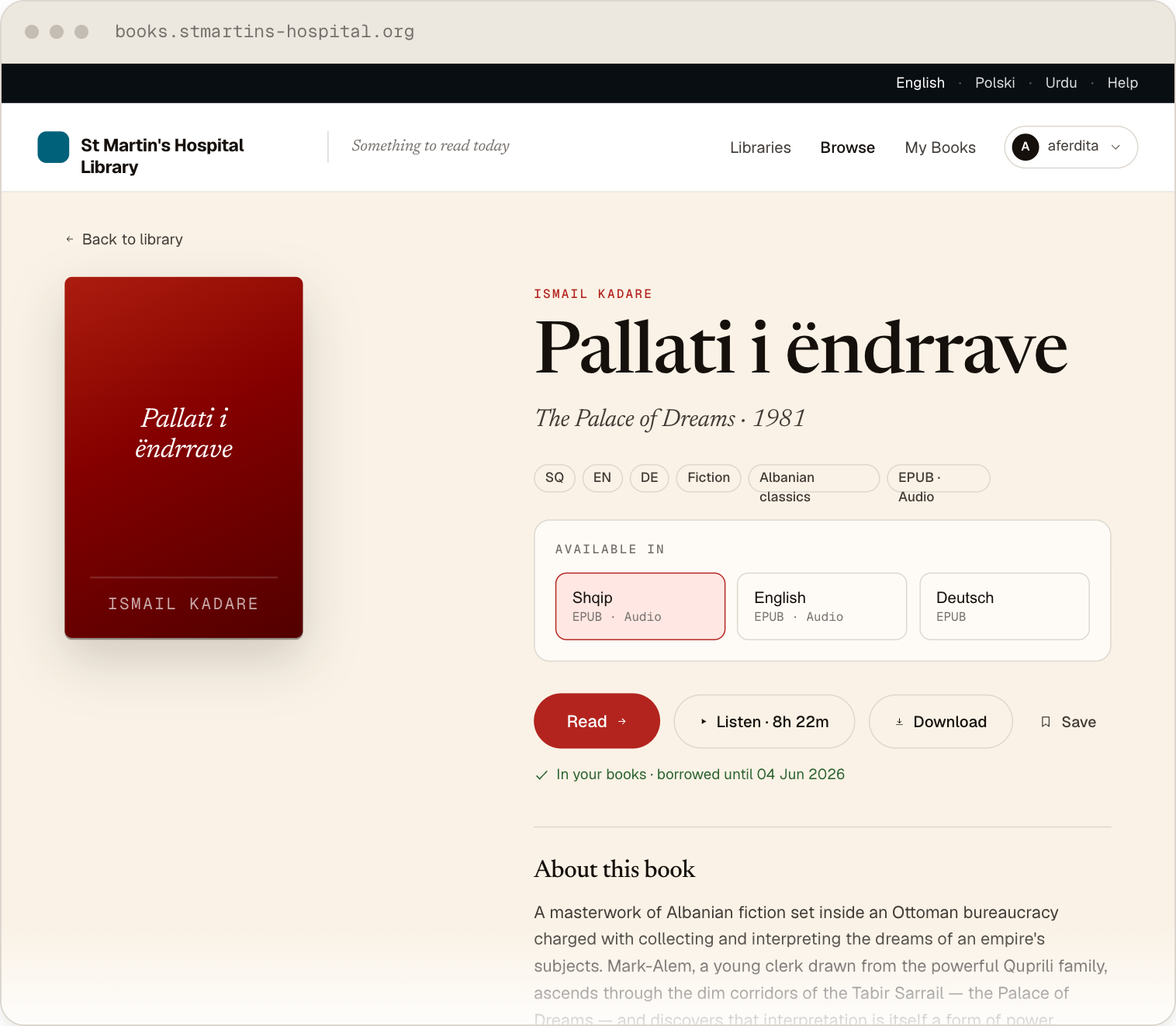
Everything needed to choose, and one button.
Format, language, length, availability. If it is on loan, the wait is stated plainly rather than hidden behind a queue position.
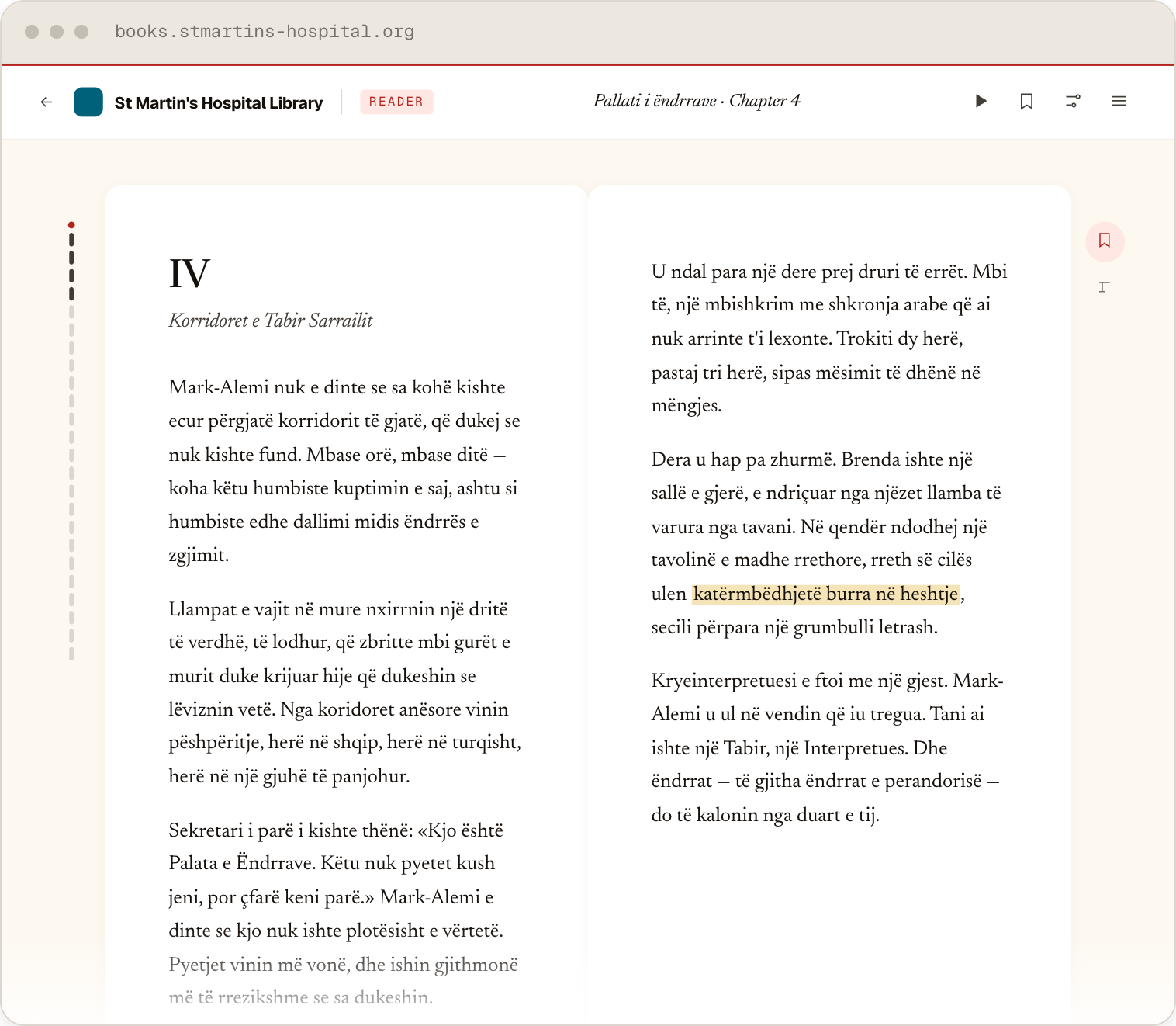
Type they can actually read.
Size, spacing, typeface and a dark mode, because a lot of reading happens at night or with tired eyes. Their place in the book follows them to any device they sign in on.
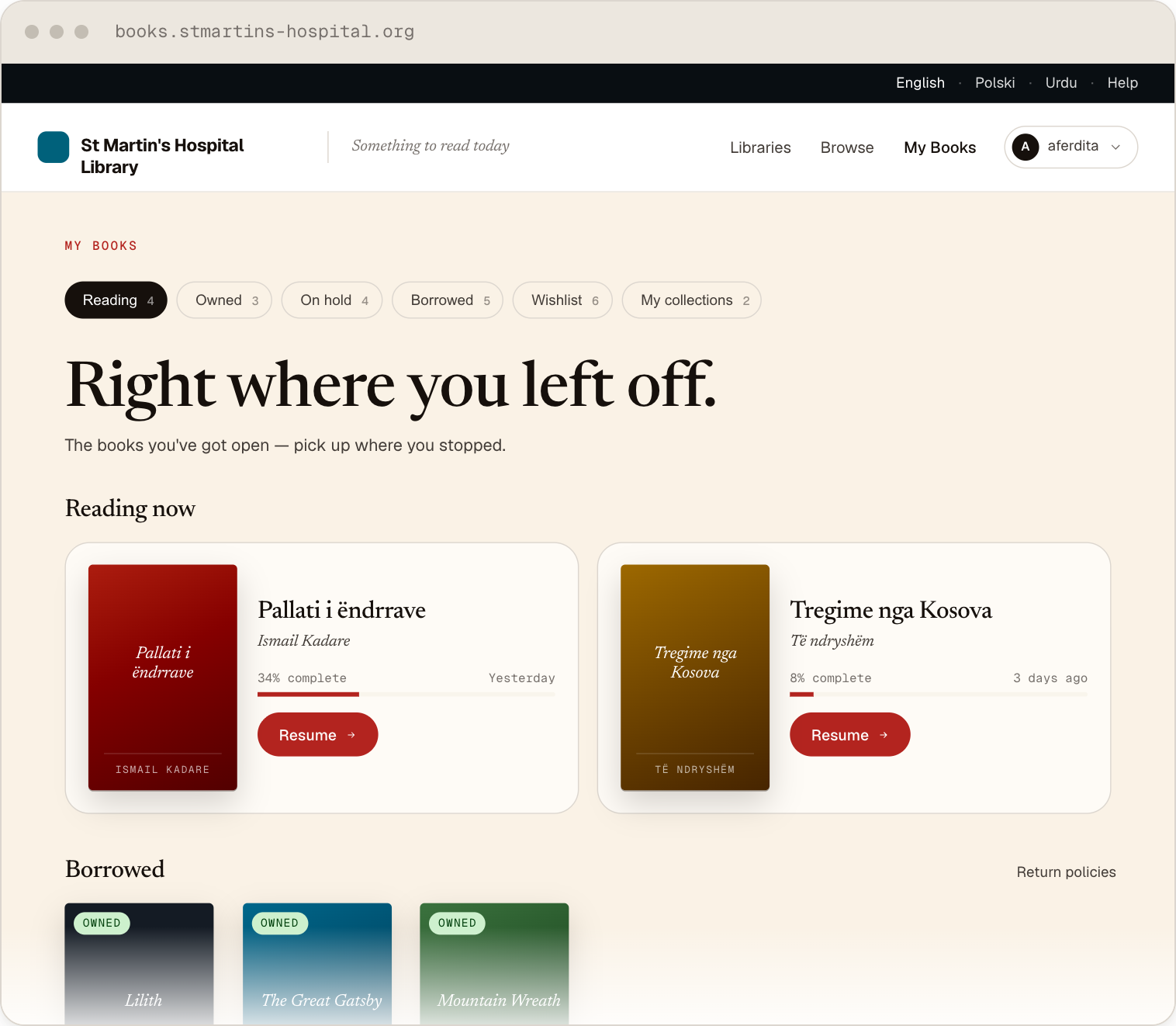
My Books remembers where they were.
Current loans, what is due, what is on hold and their own collections. Loans return themselves — nothing accrues a fine and nothing has to be handed back.
The same six screens work on a shared tablet, a desktop in a public room, a school laptop and a reader's own phone. There is no separate mobile product to buy.